
Here’s another post I published to my team’s blog over the summer and forgot to link to from here.
Back in June, I ran an experiment in mass remote collaboration at our Web Publishing Community. This was, of course, at the height of lockdown, as we were adapting to the new reality of a prolonged period of working from home.
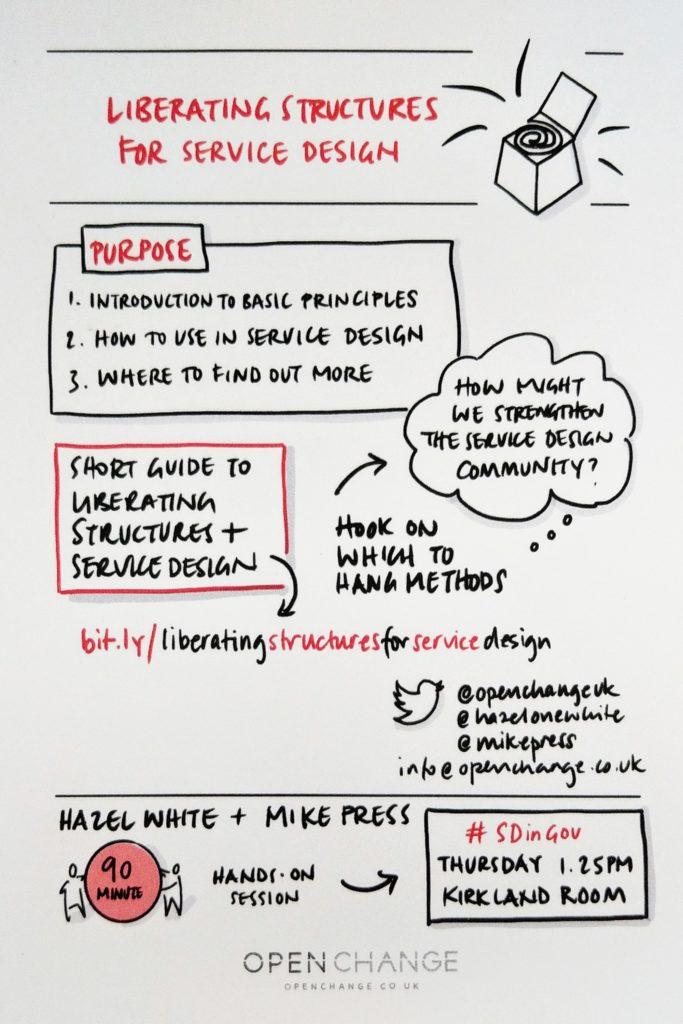
[I’d come away from the Service Design in Government conference](https://blogs.ed.ac.uk/website-communications/three-highlights-from-service-design-in-government-2020/) in March really keen to try out [liberating structures](http://www.liberatingstructures.com/), following an excellent [session run by Open Change](https://www.openchangeacademy.co.uk/liberating-structures).
Liberating structures is a set of workshop tools designed to include everyone and generate innovative ideas. These are ideally carried out with people who are physically together, so it was a little awkward when I wanted to try them out just at the moment everyone was required to be physically apart.
But some liberating structures are possible to run remotely, so I decided to introduce a large number of colleagues to a foundational liberating structure — [1-2-4-all](http://www.liberatingstructures.com/1-1-2-4-all/).
Through this session, we collaboratively sifted through ideas generated by over 40 participants, before coming to a consensus on the one strongest idea.
[Read the blog post for the full details of how it worked — and what went wrong](https://blogs.ed.ac.uk/website-communications/from-40-sets-of-ideas-to-one-in-20-minutes-a-collaboration-experiment-with-the-web-publishing-community/).