
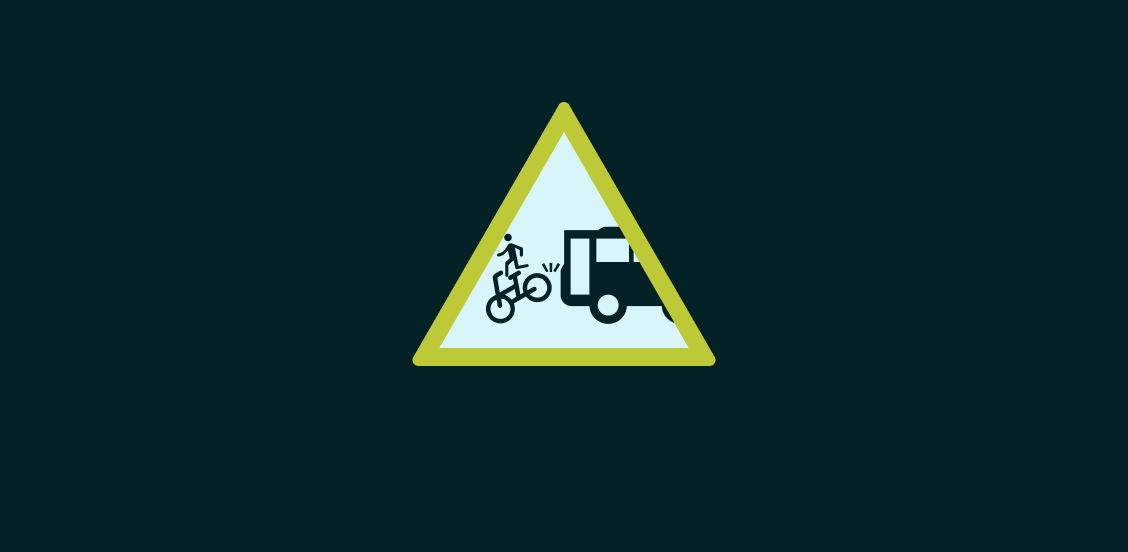
I am ending 2025 by writing about 2024. I would love to have written a retrospective on my year last year. For me, 2024 was an extraordinary year of milestone moments and major achievements. It was all overshadowed by one negative event in the summer that I had not received closure on. A year and a half on, I have only just reached something resembling a resolution.
2024 started in the most positive way possible. Our second child was born. From her earliest days, she brought immense joy, and the satisfaction that our family was complete.
In work, too, 2024 was a great year. I had enjoyed the job I had as a user experience consultant. I was learning a lot and I felt highly effective. But my own worries about the economy heightened when we had a newborn baby in our hands.
I saw a LinkedIn post for a fascinating-sounding job focused on information architecture with a public sector organisation. It was a fortuitous opportunity to specialise further in a discipline that fascinates me, as well as to get the sort of job security I felt we needed with two young children.
I was delighted to have got the job. I started in June 2024. I was getting to grips my new workplace and the mission ahead of me. I was part of an exciting project. And I was the only person in the organisation whose role was dedicated to information architecture, at least for public-facing flagship content.
They call it: “single point of failure”. People like me get involved in discussions where you are literally asked: “What if you get hit by a bus?”
Road safety
For me, road safety is a raw, personal issue.
I live on one of the busiest roads in Edinburgh. That same busy road is where my elder daughter goes to school. My children must have their wits about them at all times, from the moment they set foot from our front door.
In our nearest play park, there is a wooden sculpture of the Snail and the Whale. It is a memorial to a child who was killed when they were driven into a shopfront by someone who was unfit to operate their car.
In the closest junction to our home, a child was hit by a vehicle driver last year. Routinely, drivers of oversized vehicles demonstrate their willingness to threaten small children with the size of their vehicle. They lack the ability to show a bit of patience, display a modicum of respect to their fellow humans, or even just adhere to the Highway Code.
As a cyclist, I have also been involved in numerous near misses involving drivers who were patently not looking out for any road user smaller than a car. Some of the worst near misses have been within sight of my own home.
I used to cope with this by reminding myself that, for all the near misses I had experienced and witnessed, nothing had ever actually happened to me.
In late July 2024, that changed.
Context
I had been working in an office just east of Princes Street, Edinburgh’s busiest street. It had been an intense day, with many back-to-back meetings, both in-person and online. It was the sort of day where any little gaps in my diary got filled with new meetings and “casual chats” that were not-so-casual.
Outside, the weather was glorious. So it was also the sort of day where people left the office slightly early to make for a beer garden or some other activity that makes the most of the sunshine.
That wasn’t a prospect for me.
I had to collect my 3-year-old daughter from nursery, at the other side of the city. I squeezed in one last call, then I had to leave to make sure I would be on time before nursery closed. As I collected my helmet, someone else on another hot desk (otherwise unknown to me) struck up a conversation about cycling. She asked if I was planning to spend the evening cycling in the lovely weather, as that was her plan.
That wasn’t a prospect for me.
As I left the office, she said: “Have a safe ride.”
It’s an innocent thing to say; the “have a nice day” of cycling. But for some reason the words rang eerily in my ears as I made my way down the stairs and out of the building.
As I unlocked my bike, I observed that the street was unusually busy. I noticed large groups gathering directly outside my office building. It spooked me even more. I was particularly conscious to ride safely.
Late July is the time of year Edinburgh becomes enormously busy, almost overnight. The normal bustle of the summer holiday season turns into feverish anticipation of the festival month of August.
Then there was the strikingly sunny and hot weather. People had left work early, beer gardens were packed, the streets were teeming with pedestrians, and the rush hour roads were the usual busy mix of commuter buses, open-top tourist buses, taxis and trams.
I felt like I had to have my wits about me. I promised myself to be vigilant, and to have a safe ride, as my colleague had exhorted.
Incident
A few minutes into my journey, as I was cycling along Princes Street, a set of lights in front of me turned red where numerous pedestrians were preparing to cross. I stopped my bike.
Then, from nowhere, I heard an almighty crash from behind. I realised I had been thrown up into the air. Vigilance turned into shock.
When I hit the ground, I probably expected to go underneath the wheels of a vehicle. Shock turned into fear.
I looked up to see a stationary bus that had stopped short of me. Fear turned into relief.
Before I knew it, the bus driver had got out of the bus and started shouting at me. Relief turned into disbelief.
But I did not have time to get into a debate about whose fault it was that I had been hit from behind by a bus. My main concern was to call my wife to let her know that I wouldn’t be able to pick up my daughter from nursery, and to figure out the logistics of childcare for my 3-year-old that evening.
In pain and shock, I dragged my damaged bike onto the pavement. As I did so, the rear wheel fell off.
Immediate aftermath
Many of the numerous pedestrians who were waiting to cross the road when they saw a bus crash into me very kindly sacrificed their evening plans to assist me. Two caring people in particular co-ordinated, so one stayed with me to make sure I was OK, and another went to buy me a sugary drink and some plasters to cover my grazes. I have no idea who they were, and I wish I could say thank you.
At times, it almost felt like there was a queue of people waiting to personally ask me if I was OK. This seemed to go on for at least half an hour, in between dealing with the bus driver, someone who had arrived from Lothian Buses, and waiting for the ambulance that had been called.
Once the ambulance arrived, the paramedic was tremendously helpful. I was hoping to get home soon enough. Optimistically, I still hoped I’d be able to fix my bike and ride home. But the paramedic wanted me to stay until the police had arrived.
Another half hour or so passed, before I was told that the police were too busy to attend. I was given an incident number instead.
My wife arrived with our 6-month-old baby. She had sorted out childcare for our 3-year-old by getting our friends to pick her up from nursery and take her for an impromptu play date.
By that time, the shock had subsided a bit, and I realised I wouldn’t be able to ride my bike home, because it had been hit by a bus so badly that the wheel came off. The paramedic helped us drag my bike up to our car, where we dismantled it further to fit it into the boot.
While all the administrative details were being sorted out, a couple of those bystanders offered to give me their contact details for a witness statement. The thought had not even crossed my mind that I might need witness statements, given that I had been hit from behind. I even rejected the initial offers. But two people insisted, so I agreed.
The person from Lothian Buses gave me a phone number to call and assured me that everything would be sorted out.
Dealing with Lothian Buses
When I called the number the next day, the person on the other end of the phone told me that the incident was my fault.
They said I had come to a sudden halt, and therefore Lothian Buses would not be accepting any liability. This assertion was later repeated in writing via email.
“Surprised” would be an understatement.
I made a subject access request for all the CCTV footage containing my image from the bus. The footage shows me cycling along Princes Street while the bus gradually gains on me throughout. The lights in front of us turn red, I stop, and the bus hits my bike, and knocks me to the ground.
Alternative scenarios and the role of luck
When I told people what had happened to me, they would often say: “you were lucky”. Maybe, yes, I was lucky that I didn’t get killed by the bus. I also think I was unlucky to have been hit by a bus in the first place.
Road safety ought not to be left to luck. The section of road where I was hit is only open to bikes, buses, taxis and trams. So the only motor vehicle operators on that road are professional drivers. Ensuring the safety of other road users is not just part of their basic responsibility as drivers — it is part of their job.
So, I don’t think luck came into it. Put more plainly, I am a victim of dangerous driving and corporate interests.
I can certainly consider the alternative scenarios.
- Yes, it would have been worse if I had gone under the wheels of the bus.
- Yes, I might not have been hit by a bus if I had not brought my bike to a “sudden halt” in response to seeing a red light.
- If I didn’t stop when I saw the red light, I risked hitting one of the numerous pedestrians who were preparing to cross the road.
- If I had left work early to enjoy the sunshine like some of my colleagues, instead of squeezing in one last call, the roads might have been less busy and none of this would have happened at all.
A host of other even more alarming alternative scenarios are presented by the fact that my child’s safety seat was attached to my bike:
- What if my daughter was in the child seat, instead of it just being installed in preparation for picking her up?
- What if we had been hit by a bus on the way home from nursery after I had collected her?
- What if the child seat wasn’t attached to my bike when it was hit by the bus? Looking at the bike in the aftermath of the crash, to my non-expert eye it seemed like presence of the child seat offered me and other parts of the bike additional protection.
- That means that the child seat took the brunt of the impact, which takes us right back to considering: what if my daughter was in the seat?
Taking action
When I called the police for an update on my case, the police officer told me he had visited the bus company that day to discuss it. He was surprised to learn from me on the phone that the bus company were blaming me for the incident.
He was sympathetic, but advised that this was a civil matter and suggested I seek legal advice. He was not the first person to do so.
As I had never been involved in an accident involving another road user, I had naive expectations. At first, I thought the bus company would offer to compensate me for the damage to my bike within a week because it would have been the right thing to do.
When I involved a legal firm, I expected the whole thing to be sorted out before the end of that year.
Instead, this has dragged on for a year and a half.
Losing my bike
In the meantime, I had lost my bike. I loved that bike. It was my main mode of transport. I needed it to take my kids to nursery and get to the office.
We hadn’t budgeted for needing a new bike. We had a 6-month-old baby, and we were focused on adapting to a new routine with two kids, and my new job. Now I had to figure out how to do it all without a bike.
The time away from cycling allowed all of those what-if scenarios to build up in my head.
I wondered how I would feel safe on the roads again, when I had done everything in my power to be a responsible road user, only to be blamed by the corporate entity that had slammed a large vehicle into the back of me.
I wondered if I could ever cycle with my children again. I wondered how I would ever forgive myself as a parent if one of my kids were to be injured because I had made the choice to take them on a bike.
I became an anxious road user. I was affected most badly as a pedestrian walking on my own street, whenever I sensed a large vehicle in my surroundings. As a driver, I found myself constantly fretting about what might come out of side streets, or what else might happen out of nowhere, just as I was hit by a bus out of nowhere.
Medical impact
As part of the legal case, I was asked to complete a medical interview. From there, I was sent for a psychological assessment. I was diagnosed with adjustment disorder, moderate anxiety and depression. However, I was lucky that the mental health impacts were consigned to my use of the roads and did not unduly affect other aspects of my life.
The report recommended that I should receive therapy. I spoke to my GP about it, who pointed me to a mental health drop-in session at a nearby library. This was brilliant, and made it incredibly easy to access the health services I needed.
I had expected to be put at the bottom of a long waiting list to receive therapy on the NHS. Instead, once the paperwork had been completed, I was given my first session within weeks.
While the therapy has been useful, I have to accept that I will always carry around with me some residual anxiety. The way I cycle has changed forever. I now spend more time setting up safety equipment, and cycling quieter routes to avoid busy roads where possible. On top of the expense of buying and maintaining additional safety equipment, this all adds time to my journeys on a near-daily basis.
Trusting public services
There are organisations you can trust. Public services like the ambulance service, the police and the NHS have sprung into action when I needed them. My employer has been supportive.
There are other organisations I would have expected to be trustworthy, but fell drastically short for me.
My biggest lesson learned from all of this is not to give away my trust to a corporate entity. I had a positive impression of Lothian Buses. I see their buses every day, and I rely on their services regularly.
I was wrong to expect them just to do the right thing.
The upshot is that for a year and a half I have carried around the burden of being blamed by a large company that operates large vehicles, when I was an individual on a pedal bike with a child seat.
Getting a new bike
After discussing it with my family, I got a new bike a few months after the incident. This left us out of pocket. We unexpectedly had to fund a new bike just so that I could get from A to B, when we needed to focus supporting our family and our new baby. We also had to somehow source a new trailer, instead of saving up for a better solution in preparation for transporting two children to nursery once my younger daughter had turned 1 year old.
Initially, I was sad to have to replace my bike. Due to our budget constraints, I had to settle for a bike that was worth a fair bit less than what the bike shop suggested as a like-for-like replacement. I resented this.
The worst thing was that my old bike had three chainrings, and my new bike has only two. I felt this gave me a lot fewer options in terms of gears for cycling around such a hilly city.
But bike technology develops all the time. In many ways, a cheaper bike still has improvements over a 10-year-old steed. Strava segment times show that my new bike is faster up hills (or I am fitter), and I have grown to enjoy using it.
Riding safely
I needed to get expensive new safety equipment to deal with the anxiety and guilt I felt about taking myself and my children on a mode of transport we should be able to enjoy.
My bike and I were already highly visible when I was hit by the bus. My child’s safety seat on the rear of the bike was adorned with reflective stickers to ensure its visibility. I was wearing a white helmet embedded with flashing lights on the front and rear.
I also rode with an accelerometer, which illuminated a brake light in my helmet when the bike decelerated. This brake light will have illuminated while I was stopping before I was hit. None of this did me much good when I got hit by the bus.
Getting new safety equipment
My wife asked someone she has worked with for advice on using trailers. We were lucky that they were trying to get rid of their trailer because their kids had grown out of it. Very kindly, we were given it for free.
The trailer had seen better days. It’s a lot more cumbersome than using a child seat or, presumably, a cargo bike. This means I usually only take it back home rather than onwards to an office or train station. But it has worked well for more than a year of transporting both kids around the relatively short distances we use it for.
Despite the shortness of those distances, I do still have to negotiate some busy junctions. I was worried that people might not realise I was towing a trailer when going through junctions. So I looked into side lights, and found an amber light that I could attach to the tow bar.
I also added colourful flashing lights to the spokes of the wheels on the trailer, plus many additional reflective stickers all over it.
I decided also to invest in some new front and rear lights. I got two for the rear so that I could attach one to each side of the trailer.
Then, I got a camera to attach to my helmet so that I can have my own evidence of dangerous driving in case I ever need it. I have had shocking things happen behind me and in front of me, so I bought a camera that has front- and rear-facing cameras.
I was worried about the safety of attaching a camera to my helmet following the supposition that Michael Schumacher’s catastrophic skiing injury was worsened by the camera attached to his helmet. But I found this reassuring health and safety report from the BBC about helmet cams. Their tests showed that the presence of a camera does not appear to compromise the performance of a safety helmet.
But the safety feature that seemed to make the most difference to the way people drove around me was attaching two flags to the trailer. I hypothesise that the presence of the flags served to make my trailer look both taller and wider, and drivers were much less likely to perform a close pass.
All of these devices take extra time to set up before I can start cycling. When I started doing it all, I wondered if I had just become paranoid. Then I worried if removing any of these safety devices would be irresponsible.
Dealing with anxiety
Since I got back on the bike, I have experienced ups and downs in terms of my comfort versus my anxiety. I gradually increased my confidence on the roads again.
One day recently, I decided to take the fast main road to the office instead of the quieter route. I immediately regretted it. A white van driver drove across me while I was cycling through the main junction near my home. I had to slam on my brakes so suddenly that I skidded to a slippery halt.
In many ways, it is just another one of those near misses that you experience from time to time as a cyclist. But I now find it a lot more difficult to move on from a near miss.
Since then, I have resolved to stick to quiet routes wherever possible. This is the biggest shame for me. I have tried to go back to using the main roads that I am entitled to use and that make for faster journeys. Drivers have continued to demonstrate that I do so at increased risk to my safety.
Getting to an outcome
After 17 months of being blamed by the bus company that destroyed my bike, this month I finally received a settlement offer. While it brings closure of sorts, I still have a bitter taste in my mouth. All I really wanted in the first place was recognition that my bike — my property and my main mode of transport — had been destroyed by a bus.
Instead, I have had to listen on the phone to an employee of the bus company give an audio commentary blaming me while watching the CCTV footage that I did not yet have.
I have had to read an email that had the audacity to suggest that I was unfamiliar with the Highway Code. I have been a driver for nearly 20 years, longer than I have been a cyclist. I have an unblemished record, and I had never before been in collision with another road user.
In this case, I was a vulnerable road user that had been struck from behind. Rule 126 and rule H1 feel relevant.
The value of the impacts
I have also had to relive the incident again and again with legal and medical professionals in the name of totting up the value of my case.
What shocks me most of all is the way that the things that matter to me the most appear to make up a smaller proportion of the value of my case in legal terms, in the breakdown I was given. The value of my old bike has been recovered. Beyond that, I have received some additional compensation for the luckily relatively moderate physical injuries I sustained.
The fact that those physical injuries had a knock-on impact to the rest of my family because I was physically unable to undertake some of my parenting duties was valued at a pitiful nominal amount.
My ongoing mental health stresses and anxiety also appear to barely register as important, even though this has been by far the biggest impact on my life.
Society is keen to tell itself just now that it is doing a great job at recognising the importance of mental health. From where I sit right now, that feels like a lie. My physical injuries were painful, but they have thankfully left little trace in the long term. But they have been treated much more seriously than my more severe psychological injury, which I now doubt will ever go away.
The fact that it will never go away is due in large part to the way the bus company has blamed me for nearly a year and a half.
Now I know that if I’m ever the victim of a road accident again, I will have to live with being blamed, and I will have to fight for a long time just to get a bit of respect and my property replaced.
Lessons learned
I would do some things differently if I were ever the victim of a road incident again.
I would photograph the scene before moving my bike. This would provide my own evidence of what happened and how my bike was damaged. I was too in shock to take any photographs at the scene. Besides, I thought it was so obviously the bus company’s fault that I would not need the evidence. Now I know not to be so naive.
I would also not accept at face value anything I am told at the scene by representatives of the bus company. They will appear reasonable and contrite when they are in front of witnesses in a public place. They will blame the victim in private phone calls and emails.
I would have my own on-camera footage, and I would make it known that I have footage. I have no idea if it would help. But I feel like my case would have been taken more seriously if I had my own footage and my own way of proving I was cycling responsibly. The police had also asked me if I had my own footage, which also makes me think things would have been resolved sooner.
I would make the subject access request for the CCTV footage at the first available opportunity. Companies are obliged to disclose with you any personal information they hold about you. But they will likely drag their heels for as long as they can.
In my case, the footage also contained a significant amount of other people’s personal information due to the sheer volume of pedestrians shown in it. This means the bus company had to redact it, which likely added time to their response as well.
If I had this footage sooner, I would have been able to stand up for myself more against the accusations that I had been at fault. I would have been more confident in myself that I had not been at fault or done anything reckless.
I would also get back on my bike sooner. Spending time pondering the what-if scenarios do no good. So I should have been on the path to building my confidence back up sooner.
If you have read this to the end, thank you. I hope you had a good Christmas, and I wish you a happy new year.


@blog
What an ordeal at a high personal cost. Thanks for sharing your story. It's just as bad here – the cyclist is always at fault it seems, no matter how many lights, flags, high visibility clothing, etc.
Remote Reply
Original Comment URL
Your Profile