Improving student experiences in Learn: usability testing showcase and workshopInformatics Learning Technology Service

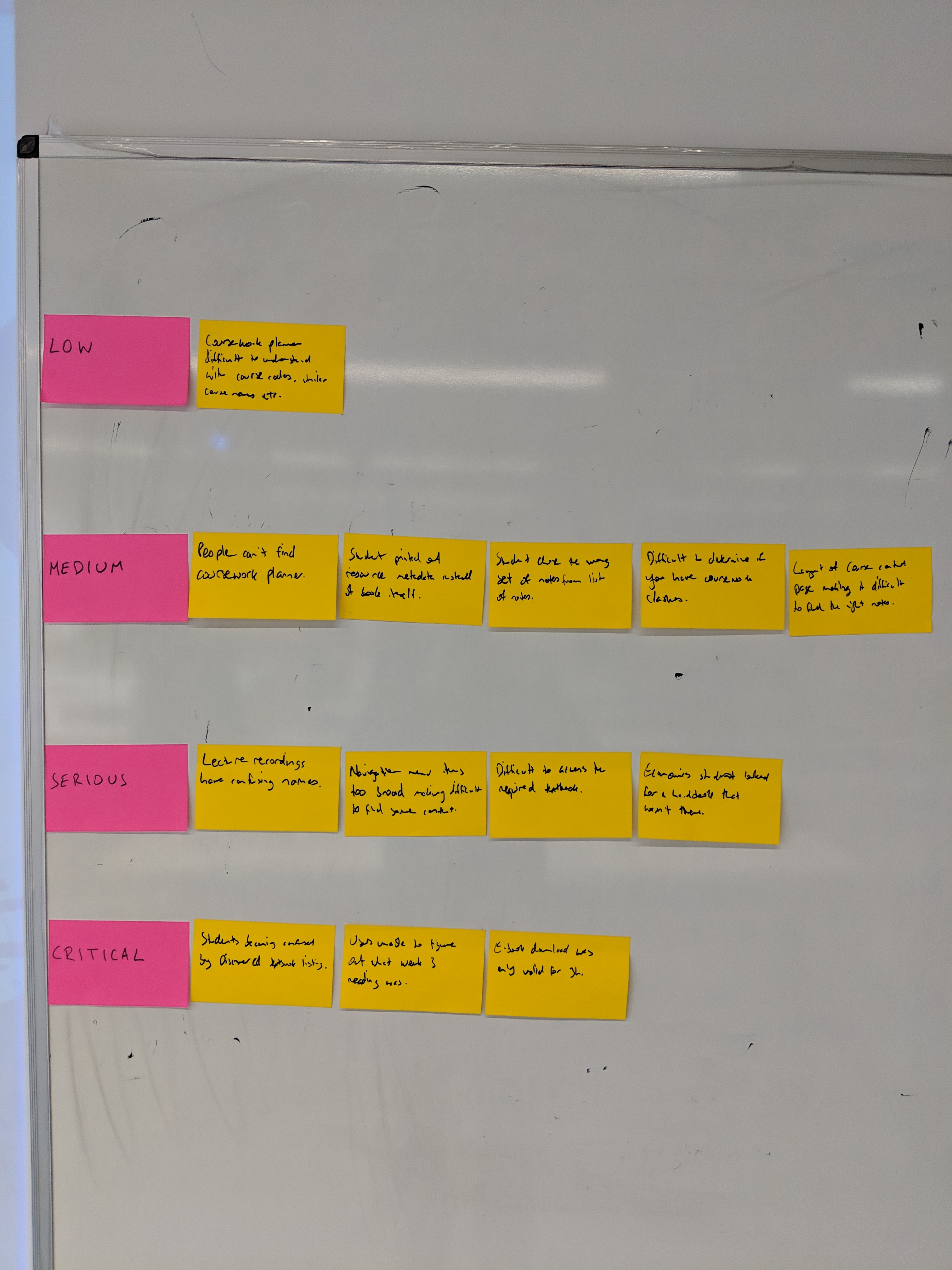
Prioritised usability issues

My colleague Alex Burford from the University of Edinburgh School of Informatics has written this great blog post about some usability testing we have conducted in support of the Learn Foundations project.

> I thoroughly enjoyed working with [Duncan Stephen](https://www.ed.ac.uk/profile/duncan-stephen) on this mini project. The feedback was informative, encouraging, and a call to action. I’m looking forward to embedding similar practice across the School for alternative platforms for content delivery.

[You can read my own reflections on this work at the Website and Communications team blog](https://blogs.ed.ac.uk/website-communications/come-to-the-next-learn-usability-testing-showcase-on-29-march/).

Each month we are working with a different school to conduct usability testing in Learn, the virtual learning environment, to inform improvements to the Learn service.

This is just one strand of a huge amount of user research I’ve been carrying out for the [Learn Foundations](https://blogs.ed.ac.uk/website-communications/tag/learn-foundations/) project. It’s been a fascinating and very enjoyable project to work on. I’ve been pretty lax at writing about it yet — but I’ll be posting much more about it soon.

People affinity mapping

I had a fabulous day at the [Service Design Academy](http://sda.ac.uk/) bootcamp yesterday.

It’s part of the [PDA in Service Design](http://sda.ac.uk/index.php/our-courses/service-design-award/). I never thought I’d be a student again. But I’m loving the opportunity to get stuck in and get talking to like-minded peers from other organisations.

It’s great to be back in Dundee again too! Looking forward to seeing what day two has in store.

Generating ideas

Generating ideas

Distilling our ideas

Distilling our ideas

View of V&A Dundee

The view from my hotel window

UX Scotland 2018 — my day-by-day notes

Some more follow-up to the UX Scotland conference, which I have published over on the University of Edinburgh Website Programme blog.

I set myself the challenge of writing a summary of each session I attended at UX Scotland, as a way of forming my own thoughts on each topic, and to make sure to follow up on everything I wanted to.

This resulting blog post is long. But I am sharing this on the basis that others might find it useful and seek to learn more about these topics, as I did.

UX Scotland 2018 write up

My colleagues and I have gathered together our thoughts on our highlights of the UX Scotland conference.

I am also in the process of writing up some further thoughts on most of the other sessions, which I will publish to the [University Website Programme blog](https://website-programme-blog.is.ed.ac.uk/) soon.

But in the meantime, find out about my top three sessions, and the things I intend to put into practice as a result of attending the conference.

Reporting findings to the API Service team

Bringing focus to our findings: continued user research for the API Service

This is the final blog post in my short series about the [user research I led on for the API Service at the University of Edinburgh](https://website-programme-blog.is.ed.ac.uk/bringing-focus-to-our-findings-continued-user-research-for-the-api-service/).

This post covers the second half of the research, where we brought focus to the detailed picture developed in the first phase, and began to prioritise the issues to help the API Service team direct their ongoing work.

Crying over spilt milk: An empathy map example

Example empathy map

I have recently been involved in a project with the University of Edinburgh UX Service to conduct [user research for the API Service](https://duncanstephen.net/user-experience-research-for-the-university-of-edinburghs-api-service/).

In one of the workshops we ran, we wanted participants to work with empathy maps to give us an insight into their experiences.

This post on the University Website Programme blog outlines [how I introduced workshop participants to the concept of empathy maps](https://website-programme-blog.is.ed.ac.uk/crying-over-spilt-milk-an-empathy-map-example/), with an example around my own experience of buying milk.

Buying milk is a simple task that most of us carry out on a regular basis. But this example showed how using an empathy map can reveal a surprising amount of detail about the behaviours and feelings someone goes through when completing a task.

Presenting findings of our user research for the API Service

User experience research for the University of Edinburgh’s API Service

I have been leading some user research for a project at the University of Edinburgh to develop API Service. [This post on the University Website Programme blog outlines the steps we went through in the first phase of the research](https://website-programme-blog.is.ed.ac.uk/user-experience-research-for-the-api-service/). This included interviewing developers, running workshops, and developing personas and journey maps.

This has been a successful and rewarding project. It has been particularly interesting for me to do some UX work that wasn’t necessarily to do with a website. There will be a couple more blog posts about it to come.